

Your living room should be a place to relax and spend time with family, friends or just yourself, whether your style is traditional or modern, formal or casual, colorful or muted. Getting it to look good and work well at the same time is easier with a clear order of steps.
What is the best way to decorate a living room? Start with how you use the room, then plan the layout, choose the big anchor pieces (sofa and rug), set a color palette, and only then add lighting, textures, art and accessories. Working from large to small keeps you from buying cushions and decor that do not match the furniture you eventually choose, and it makes sure the room is comfortable before it is pretty.
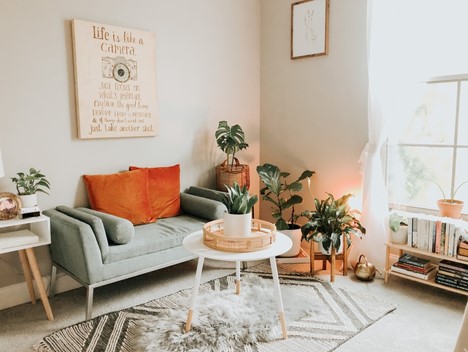
The Best Way to Decorate a Living Room, Step by Step
- Define how you use the room: TV, conversation, reading, kids playing, working from home, or a mix.
- Measure and plan the layout: note windows, doors, heating vents, outlets and the focal point.
- Choose the sofa and rug: these set the scale and much of the color.
- Pick a palette: a main color, a secondary color and an accent.
- Layer lighting: ceiling light, floor and table lamps, accent lights.
- Add texture, wood and fabric: mix materials so the room feels warm.
- Finish with art, plants and accessories: the personal layer.
Plan the Layout First
Arrange seating around a focal point, such as a fireplace, a large window, the TV or a piece of art. A few typical measurements help:
| Item | Typical guideline |
|---|---|
| Main walkways | About 30 to 36 inches (75 to 90 cm) |
| Sofa to coffee table | About 14 to 18 inches (35 to 45 cm) |
| Coffee table length | About two-thirds of the sofa length |
| Conversation distance | Seats within about 8 to 10 feet of each other |
| Rug size | Large enough that at least the front legs of all seating sit on it |
| Art height | Center about 57 to 60 inches (145 to 150 cm) above the floor |
In a large room, pull furniture away from the walls and create zones, for example a seating area and a reading corner. In a small room, use fewer pieces on visible legs and avoid oversized sectionals. If you want to test a layout before you move heavy furniture or buy a new sofa, draw the room to scale. Plan7Architect lets you create a floor plan with exact dimensions, place furniture and check the result in a 3D view, so you can see whether walkways stay open.
Balance Light and Dark Colors
An all-white living room can feel cold and distant, while a room that is dark everywhere can feel like a tunnel. Combining light and dark shades gives a lively, balanced look. Aim for at least a little white or light color and a little dark in every part of the room, such as a dark rug under a light sofa or black picture frames on pale walls.
A simple way to plan the palette is the 60-30-10 split: about 60 percent main color (walls, large surfaces), 30 percent secondary color (sofa, curtains) and 10 percent accent (cushions, art, vases).
Contrast Neutrals
You do not need bright colors for a rich-looking room. A mix of contrasting neutrals works well: white walls, caramel leather, a gray sofa, brass hardware and blue-gray cabinets all set each other off and show their different finishes and undertones. Even before you add color or pattern, such a palette looks layered.
Add a Touch of Color
Even a small amount of color goes a long way. When in doubt, blue is a safe choice: it pairs well with warm materials like leather and wood and works with almost any accent color. Greens and warm earth tones such as rust or ochre are also easy to live with.
Layer Lighting
One ceiling light rarely makes a living room feel inviting. Plan three layers: ambient light for general brightness, task light such as a floor lamp next to a reading chair, and accent light such as a table lamp on a sideboard or a picture light. Warm bulbs of about 2700 to 3000 K feel cozy in the evening, and dimmers let you change the mood easily.
Play with Texture and Wood
Texture is easy to overlook because we touch it more than we see it. Soft, pleasant surfaces combined with rougher ones create a relaxed atmosphere. Mix leather, cotton, wool, linen, metal, stone, glass and plants, and add small touches such as taper candles, a chunky knit throw or a woven basket. Antiques and vintage finds add even more variety.
Wood is one of the best materials for a warm living room. Use it in wall paneling, side tables, stools, picture frames, shelves or carved objects.
Mix Furniture Instead of Buying a Matching Set
Many stores sell complete living room sets with matching upholstery. Matching furniture can look orderly in a formal sitting room, but mixing pieces usually makes a living room feel more relaxed and personal. One easy approach is to combine leather chairs with a fabric sofa, or the other way around. It adds variety to the room design and gives everyone a choice of seating.
Choose Practical Fabrics
Living room seating needs fabric that is both comfortable and durable. What that means depends on your household: small children, pets and frequent guests all call for tougher choices.
- Mid-tone colors hide dirt and wear better than very pale or very dark fabrics.
- Leather wipes clean easily after spills, but it scratches, so it may not suit cats or large dogs.
- Performance fabrics, denim and corduroy are durable and add character.
- Tight weaves last longer than loose ones. Bend a sample: if you can see the backing, the weave is loose.
Anchor the Seating with a Patterned Rug
A rug anchors the seating area, adds color and pattern, and softens the sound in a room with hard floors. A patterned rug also hides small stains. Even over wall-to-wall carpet, a rug can define the seating area, and you can roll it up and send it to the cleaner after a big spill.
Do Not Take It Too Seriously
A gallery wall, mismatched throw pillows, open storage baskets and a playful piece of furniture make a living room feel lived in. If everything is perfectly in place, any dropped toy or draped blanket stands out. A little controlled disorder lets everyday life blend in.
Frequently Asked Questions
Where do I start when decorating a living room?
Start with how you use the room and measure it. Plan the layout, then choose the sofa and rug before paint colors and accessories.
How do I make a living room look expensive?
Use a rug that is large enough, hang curtains high and wide, add layered lighting, choose a few quality pieces with natural materials, and keep clutter low.
What size rug should a living room have?
Common sizes are about 8 x 10 feet or 9 x 12 feet in the US (roughly 240 x 300 cm or 270 x 360 cm). At minimum, the front legs of the sofa and chairs should rest on the rug.
How can I make a small living room feel bigger?
Use light walls, furniture on legs, a large mirror opposite a window, fewer but well-scaled pieces, and keep walkways clear.
Watch how a complete house is planned from start to finish – in under 25 minutes


The 3 Plan7Architects

Suitable for small hobby projects
No garden planning and only limited floor plan creation with few wall types
★★★★★

For medium-sized projects
Unrestricted floor plan creation & garden planning
No export options for your architect and no plans for building permit applications
★★★★★

For projects of any size
Import & export for working with an architect
Create plans for real building permit applications
Much larger range of features than the other two versions
★★★★★