

Commercial Building Plan – What to Consider?

When creating a commercial building plan, you must consider zoning regulations, building codes, structural requirements, fire safety, accessibility, technical systems, site logistics, and long-term operating costs. Commercial projects are significantly more complex than residential buildings because they are subject to stricter legal standards, higher occupancy loads, public safety requirements, and technical regulations.

If you want your project to move smoothly from concept to permit approval and construction, you must address the following areas from the very beginning:

  • Zoning and land use compliance

  • Building codes and permit requirements

  • Structural system and load planning

  • Fire safety and emergency exits

  • Accessibility regulations

  • HVAC, electrical, and plumbing systems

  • Parking and traffic flow

  • Energy efficiency standards

  • Construction budget and lifecycle costs

Over the years, I have seen commercial projects delayed for months simply because one of these aspects was underestimated. Proper planning at the beginning prevents expensive redesigns later.

Commercial building floor plan created with Plan7Architect software

1. Zoning and Land Use Regulations

What to Check Before You Start Designing

Before you draw a single wall, verify whether commercial use is permitted on the property. This step is often overlooked by first-time developers.

You must check:

  • Whether commercial development is allowed on the lot

  • What type of commercial use is permitted, such as office, retail, warehouse, mixed-use, medical, or hospitality

  • Maximum building height limits

  • Floor area ratio limitations

  • Setback requirements from property lines

  • Parking minimums

Local zoning ordinances differ significantly between countries, states, and municipalities. In the United States, zoning is usually regulated at city or county level. In Europe, municipal planning authorities define land use categories and development plans.

If your project exceeds height restrictions, density limits, or use categories, you may need a variance or special permit, which can delay the project significantly.

Practical Tip:
Always obtain written confirmation from the planning authority before investing heavily in architectural drawings.

2. Building Codes and Permit Requirements

Understanding Legal Compliance

Commercial buildings must comply with stricter building codes than residential projects. These codes regulate structural safety, fire protection, sanitation, accessibility, and energy performance.

Key aspects include:

  • Minimum corridor widths

  • Required stair dimensions

  • Exit spacing

  • Fire resistance ratings

  • Occupancy classifications

  • Structural load requirements

For example, minimum corridor widths in commercial buildings may be required to be 1.2 m or 4 ft or more depending on occupancy and jurisdiction. These values vary by building type and expected number of occupants.

In the United States, commercial buildings follow the International Building Code adopted locally. In Europe, national building regulations apply, often based on Eurocodes and local fire and accessibility standards.

Permit Process

Most commercial projects require:

  • Architectural drawings

  • Structural engineering plans

  • Mechanical, electrical, and plumbing documentation

  • Energy calculations

  • Fire safety concept

Without complete documentation, permit approval will not be granted.

Common Permit Documentation Requirements:

Document Type Typically Required Prepared By
Floor Plans Yes Architect or Designer
Structural Plans Yes Structural Engineer
Fire Safety Plan Yes Fire Consultant
Energy Compliance Often Energy Consultant
Site Plan Yes Architect or Surveyor

3. Structural Planning and Load Requirements

Commercial structures must carry heavier loads than residential buildings.

You must distinguish between:

  • Dead loads, meaning the permanent weight of the building

  • Live loads, meaning occupants, furniture, equipment, and storage

  • Environmental loads such as wind and snow

Office buildings, retail spaces, and storage facilities each require different load capacities. Warehouses, for example, often require significantly higher floor load ratings than office spaces.

Structural systems typically include:

  • Reinforced concrete

  • Structural steel

  • Timber or hybrid systems

The structural system influences ceiling spans, column placement, and overall flexibility of the interior layout.

In my experience, early coordination between architectural design and structural engineering prevents costly redesigns caused by unexpected column placements or beam depths.

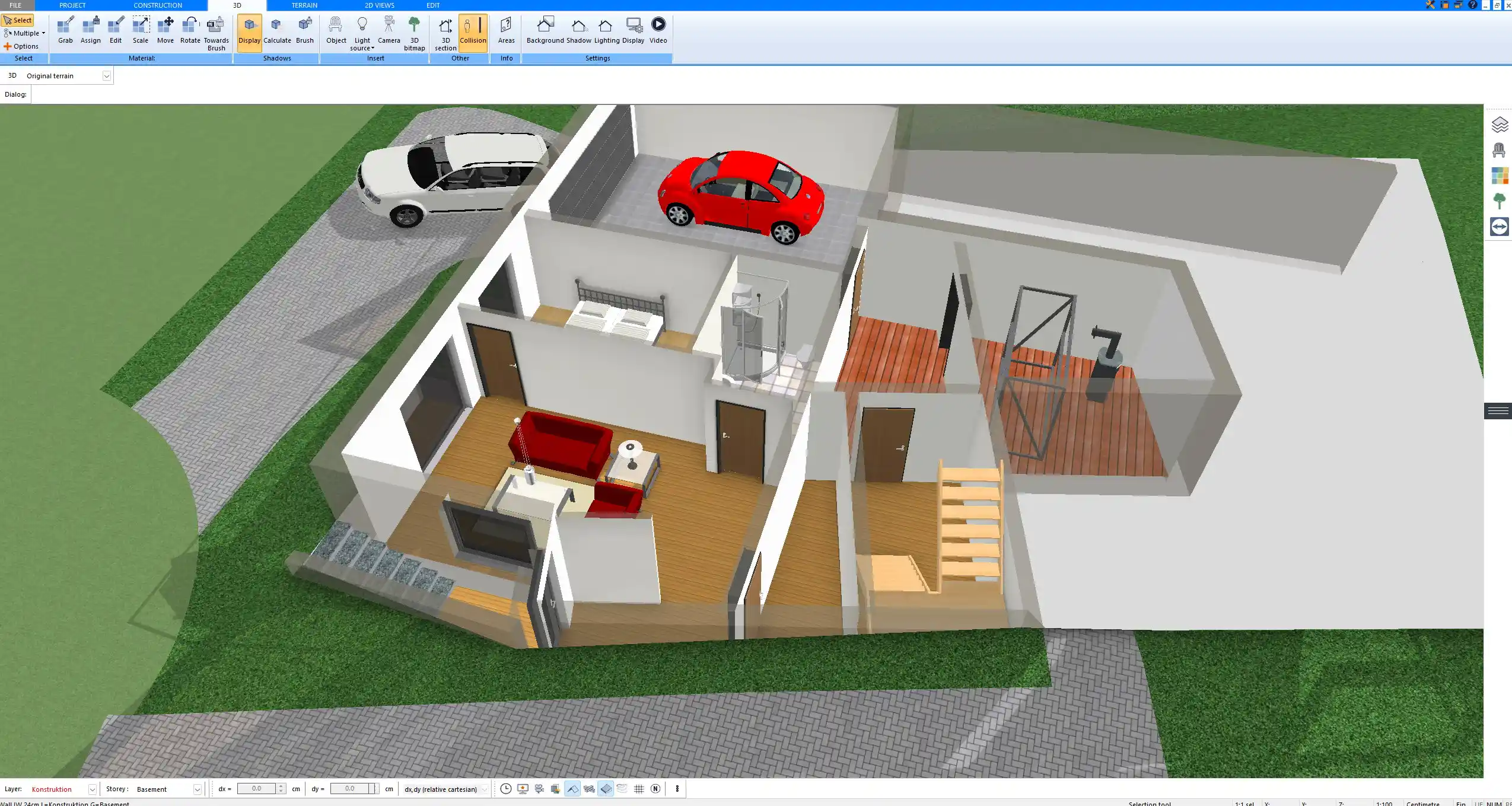
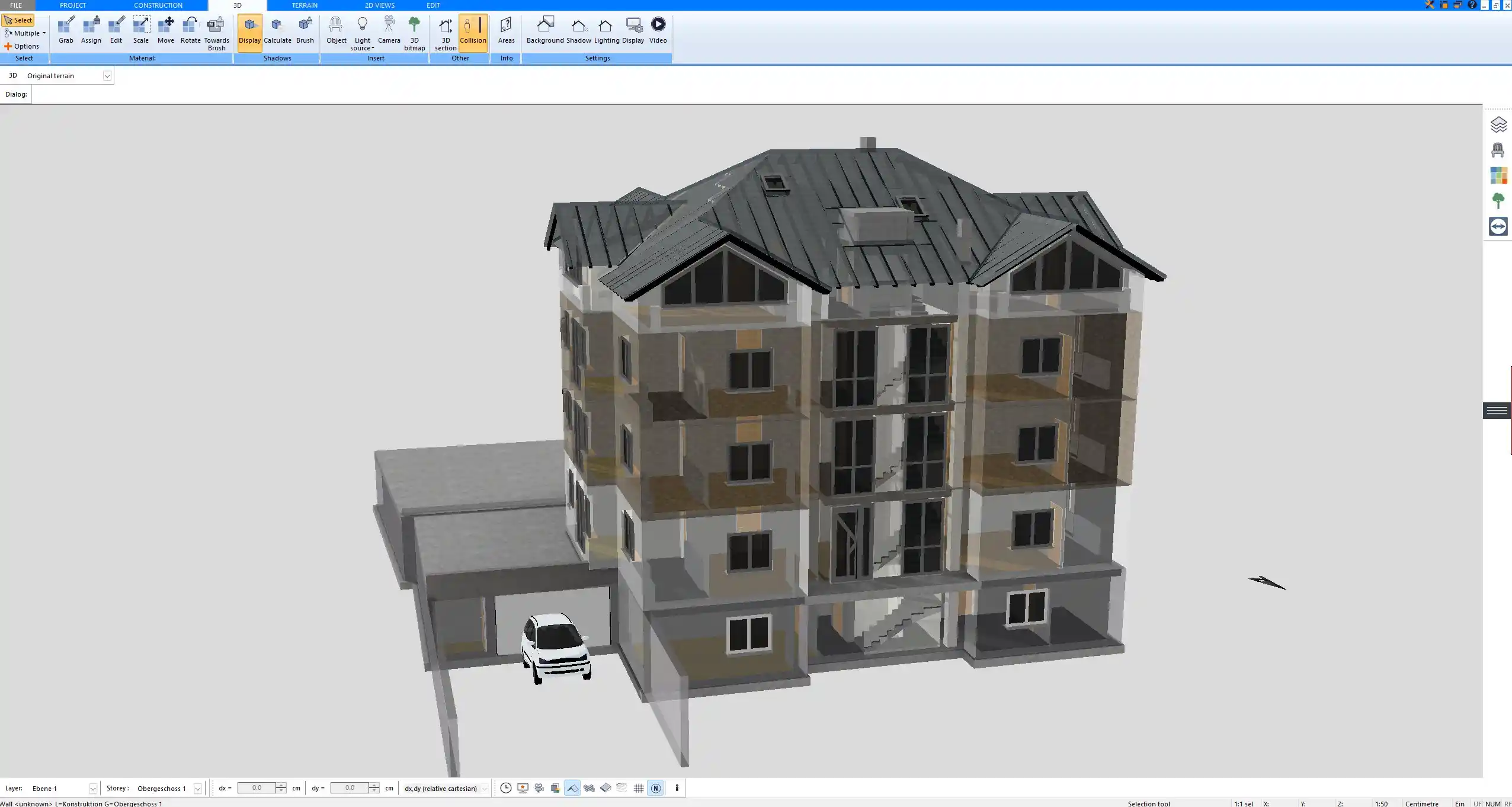
3D visualization of a commercial property designed in Plan7Architect

4. Fire Safety and Emergency Planning

Fire safety in commercial buildings is not optional. It is one of the most heavily regulated aspects of the project.

You must plan:

  • The number and location of emergency exits

  • Maximum travel distance to exits

  • Fire-rated walls and doors

  • Smoke extraction systems

  • Sprinkler systems where required

  • Clearly marked escape routes

Occupant load calculations determine how many exits are required. Retail stores and assembly spaces often require multiple exits even in relatively small buildings.

Fire-rated construction elements must comply with local standards, often defined in minutes of fire resistance.

Important Consideration:

If fire escape routes are not properly integrated into the floor plan from the beginning, major redesign may be required during permit review.

5. Accessibility Requirements

Accessibility is mandatory in most commercial buildings worldwide.

In the United States, ADA standards apply. In Europe and other regions, similar accessibility regulations exist.

You must ensure:

  • Barrier-free building access

  • Accessible restroom facilities

  • Sufficient maneuvering space

  • Elevator installation in multi-story buildings

  • Proper door widths

For example, door clear widths and turning spaces for wheelchairs must comply with local regulations. These dimensions are clearly defined in building codes.

Accessibility is not simply about compliance. It also improves usability and broadens your customer base.

Practical Tip:

Plan accessibility from the first draft. Retrofitting accessible features later is significantly more expensive.

6. Technical Systems Planning

Commercial buildings require significantly more complex technical systems than residential structures.

HVAC Planning

Heating, ventilation, and air conditioning must be designed based on:

  • Occupancy levels

  • Internal heat loads

  • Regional climate

  • Ventilation requirements

Retail stores, offices, restaurants, and medical facilities each have different ventilation standards.

Electrical Planning

Electrical systems include:

  • Lighting design

  • Emergency lighting

  • Power distribution

  • Backup power systems

  • Data and communication infrastructure

Modern commercial spaces often require advanced lighting control systems and sufficient capacity for IT infrastructure.

Plumbing Planning

Plumbing must account for:

  • Occupancy-based restroom requirements

  • Commercial fixtures

  • Drainage and wastewater management

Restroom count is often regulated based on occupant load.

Coordination between architectural and MEP planning is critical. Inadequate ceiling space for ducts and pipes is a common planning mistake.

7. Functional Layout and Workflow Efficiency

Functionality determines long-term success of a commercial building.

You must ask:

  • How do customers move through the space?

  • How do employees operate within the building?

  • Are there bottlenecks?

  • Is storage positioned efficiently?

In retail design, layout influences purchasing behavior. In office design, layout impacts productivity. In warehouses, layout determines operational efficiency.

Functional Planning Checklist:

  • Clear circulation paths

  • Logical zoning of public and private areas

  • Efficient back-of-house placement

  • Adequate storage

  • Noise separation where necessary

In my experience, workflow analysis saves more money over the building’s lifetime than minor construction cost reductions.

Exterior rendering of a commercial building modeled in Plan7Architect

8. Parking, Site Access, and Traffic Flow

Commercial developments often fail during planning because of insufficient parking or poor site logistics.

You must consider:

  • Minimum parking requirements defined by local codes

  • Accessible parking spaces

  • Delivery zones

  • Emergency vehicle access

  • Pedestrian safety

  • Loading dock positioning

Parking ratios are typically defined per square meter or square foot of floor area or per number of seats in assembly spaces.

Improper site planning can lead to permit rejection.

9. Energy Efficiency and Sustainability

Energy performance standards are increasingly strict worldwide.

Commercial projects often require:

  • Insulation standards

  • Energy compliance calculations

  • Efficient glazing systems

  • LED lighting

  • Renewable energy integration

Operational cost is a major factor in commercial property value.

Energy Planning Considerations:

Area Impact
Insulation Reduces heating and cooling demand
Glazing Affects solar gain and energy loss
HVAC Efficiency Influences operating cost
Lighting Reduces electricity consumption
Renewable Energy Improves long-term savings

Investing in energy-efficient systems increases initial cost but reduces long-term expenses significantly.

10. Budget Planning and Cost Control

Commercial construction costs can escalate quickly if not controlled carefully.

You must account for:

  • Construction cost per square meter or square foot

  • Engineering fees

  • Permit and inspection fees

  • Utility connection costs

  • Contingency reserves

  • Operational expenses

Budget Categories Overview:

Category Typical Cost Share
Construction Largest portion
Engineering Moderate
Permits Variable
Site Work Often underestimated
Technical Systems Significant

In my experience, technical systems are frequently underestimated in early budgets.

11. Digital Planning Tools for Commercial Building Plans

Professional digital planning tools are essential for commercial projects.

With modern planning software, you can:

  • Create detailed floor plans

  • Generate sections and elevations

  • Visualize the building in three dimensions

  • Control layers for technical planning

  • Export drawings in DWG and DXF formats

Plan7Architect supports both metric and US units, which allows you to plan internationally without difficulty. You can switch between unit systems directly in the software.

Digital planning enables:

  • Faster revisions

  • Clear documentation for permits

  • Improved coordination with engineers

  • Accurate dimension control

In commercial planning, precision and clarity are critical. Working digitally reduces risk significantly.

Common Mistakes in Commercial Building Planning

From practical experience, the most common mistakes include:

  • Ignoring zoning limitations

  • Underestimating fire safety requirements

  • Poor coordination between architecture and technical systems

  • Insufficient parking planning

  • Neglecting accessibility

  • Underestimating construction cost

Avoiding these errors saves months of delay and significant financial loss.

Create Professional Commercial Building Plans with Plan7Architect

If you want to implement everything discussed in this article efficiently and professionally, you can create your complete commercial building plan with Plan7Architect. The software allows you to design detailed floor plans, sections, elevations, fire escape layouts, accessibility-compliant spaces, technical planning layers, and full 3D visualizations — all in one system. You can plan zoning-compliant layouts, integrate structural elements, coordinate HVAC and electrical areas, and prepare clear drawings suitable for permit submission.

Plan7Architect supports both European and US units, so you can work in metric or American measurements depending on your project location. This makes it ideal for international commercial planning.

Instead of relying on fragmented tools, you can develop your entire commercial concept in one structured environment and make precise adjustments at any time.

You also receive a 14-day right of withdrawal. If you decide the software is not right for your project, you can simply cancel your purchase via email within 14 days. This replaces the need for a trial version and allows you to test the full professional version without risk.

Plan your project with Plan7Architect

Plan7Architect Pro

Plan7Architect Pro 5 for $109.99

You don’t need any prior experience because the software has been specifically designed for beginners. The planning process is carried out in 5 simple steps:

1. Draw Walls

Create your 2D floor plan by accurately drawing and adjusting rooms and walls for your home design.

2. Windows & Doors

Optimize your space layout with perfectly fitting door and window elements.

3. Floors & Roof

Visualize different levels and roof types for your home design.

4. Textures & 3D Objects

Choose materials and textures to customize floors, walls, and 3D objects individually for a realistic representation of your design.

5. Plan for the Building Permit

Sections and views for the building application can be created with Plan7Architect (1)
Create professional construction drawings with elevations, sections, and complete plan compilations.

6. Export the Floor Plan as a 3D Model for Twinmotion

Visualize your project with cutting-edge 3D technology and create high-quality image renderings and videos using Twinmotion by Epic Games.


  • – Compliant with international construction standards
  • – Usable on 3 PCs simultaneously
  • – Option for consultation with an architect
  • – Comprehensive user manual
  • – Regular updates
  • – Video tutorials
  • – Millions of 3D objects available

Why Thousands of Builders Prefer Plan7Architect

Why choose Plan7Architect over other home design tools?

14-Day Money-Back Guarantee
No questions asked. Just email us within 14 days if you’re not satisfied.
One-time payment – no subscription
Own the software forever. No hidden costs. No monthly fees. Updates are optional.
Based on $2,500 professional architecture software
Plan7Architect is an optimized version — used by professionals and private users alike.
Supports international building standards
Adaptable to US, UK, Canadian, Australian, and European requirements.
Works offline – use on up to 3 devices
No internet required. Install on up to 3 computers – ideal for home and office use.
Metric & imperial units
Switch freely between feet/inches or meters/centimeters — perfect for global use.
++
All key export/import formats included
DWG, DXF, OBJ, 3DS, STL, PDF, image export/import, and SketchUp import — for smooth collaboration.
ii
Create real building permit documents
Generate floor plans, elevations, cross-sections, and full construction drawings.
Supports wood framing for walls and roofs
Design wall and roof structures, gables, dormers, and freely constructed wood frameworks.
Easy learning curve with full support
Includes video tutorials, ticket system, detailed PDF manual, sample projects, and access to our customer forum.
Excellent verified reviews
Top ratings on Trusted Shops and Amazon.
Ongoing development – 3–4 updates per year
Always improving, with a modern 3D engine and regular feature upgrades.

Watch how a complete house is planned from start to finish – in under 25 minutes

Detailed House Planning (25 Min)

Small Home Planning Demo (12 Min)

The 3 Plan7Architects

Sale!
Plan7Architect Pro
Original price was: $259.99.Current price is: $109.99.

Verified Customer Reviews

Verified Customer Reviews

Trusted Shops:

Home » Building Plan Wiki » Commercial Building Plan – What to Consider?
Youtube
Select your currency